
The Zillow Effect
Why Online Home Estimates Are Just the Beginning
Type your address into Zillow, and within seconds you'll have an answer.
A number appears on the screen. Sometimes it's exciting. Sometimes it's disappointing. And almost always, it sparks the same question:
"Is my home really worth that?"
For many homeowners, that number becomes the starting point for conversations about selling, refinancing, or simply keeping an eye on the market.
But while Zillow's Zestimate is an impressive piece of technology, it isn't an appraisal and it isn't a substitute for understanding what buyers are actually willing to pay.
Sometimes it's surprisingly close.
Other times, it can miss the mark by tens, or even hundreds, of thousands of dollars.
Because a home is far more than a collection of data points.
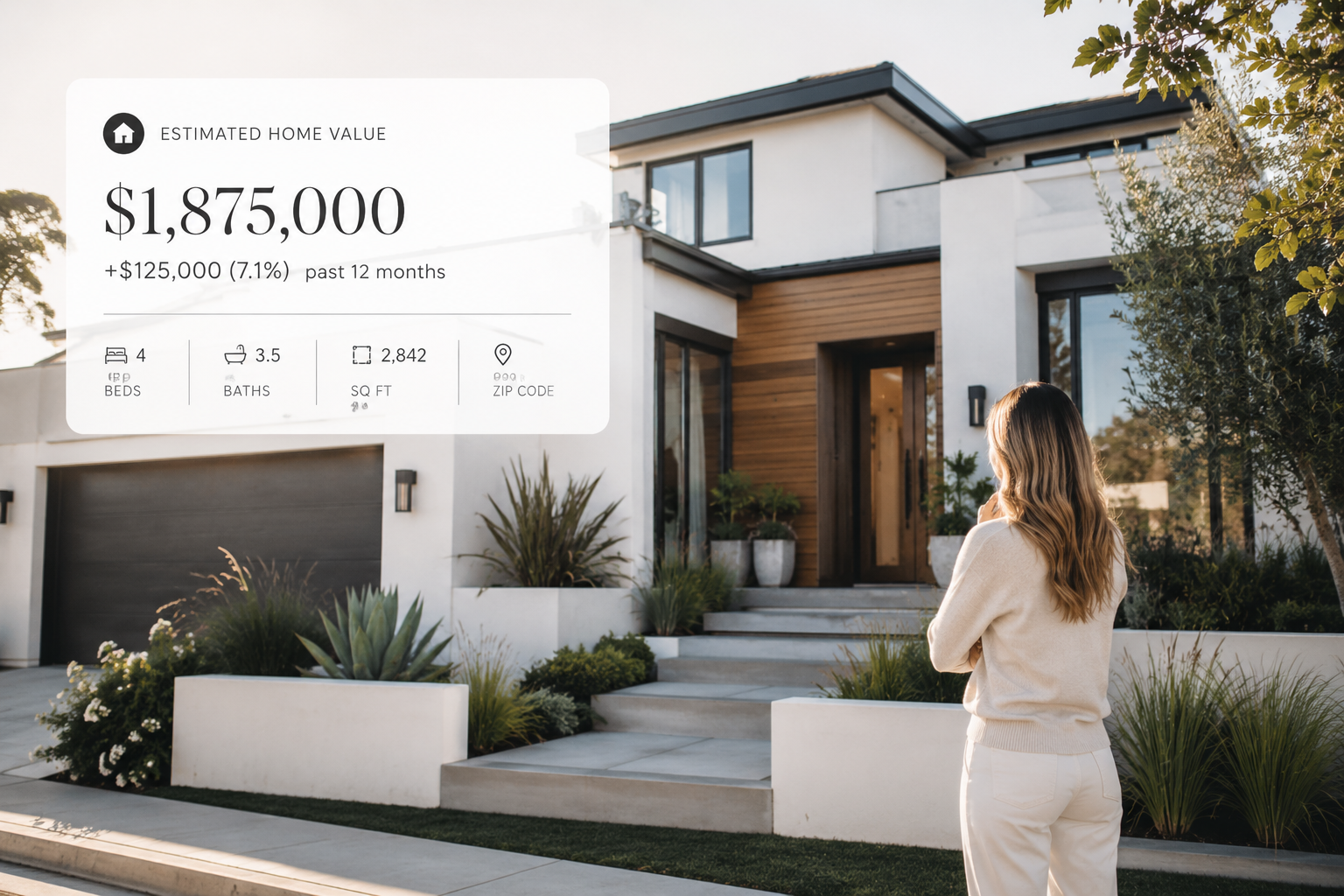
What Zillow Knows
Online valuation tools are genuinely sophisticated. They analyze public records, recent sales, tax information, market trends, square footage, bedroom and bathroom counts, and dozens of other variables to arrive at an estimate.
That's impressive.
But it's still an estimate.
And it doesn't actually walk through your front door.
What Zillow Can't See
A computer doesn't know that you completely remodeled your kitchen last year. It doesn't know your backyard opens to a peaceful canyon while a nearby home backs to a busy road. It can't appreciate soaring ceilings, natural light, custom finishes, mature landscaping, or the feeling buyers experience when they step into a beautifully maintained home.
Equally, it may not recognize deferred maintenance, outdated interiors, or features that quietly reduce a home's appeal in the eyes of today's buyers.
These are the details that often have the most meaningful impact on value, and they live firmly outside the reach of any algorithm.
Two Homes. Two Very Different Prices.
Picture two homes with identical floor plans, square footage, and zip codes in the same neighborhood.
One has original finishes from the early 1990s.
The other has been thoughtfully renovated; updated kitchen and bathrooms, new flooring, modern windows, fresh landscaping, and the kind of curb appeal that makes buyers slow down as they pull up.
An automated estimate may view those homes as very similar.
Buyers won't.
And that's where the market tells a very different story than the algorithm.
Why This Matters
For sellers, relying solely on an online estimate can lead to pricing decisions that work against you.
Price too high, and you risk losing the critical momentum of those first weeks on the market, the window when buyer interest is highest and offers are most likely to come in strong.
Price too low, and you leave real money on the table.
For buyers, assuming an online estimate reflects true market value can be equally misleading. What a buyer is ultimately willing to pay is shaped by competition, inventory, condition, location, and the intangible qualities that no algorithm can fully measure.
Use It as a Starting Point Not the Final Answer
Online estimates are an excellent tool for satisfying curiosity and developing a general sense of where the market is moving.
But they're just that… a starting point.
The most accurate picture of a home's value comes from evaluating recent comparable sales, current market conditions, and the unique characteristics that make each property distinct. It comes from someone who knows the neighborhood, who has walked through competing homes, negotiated in today's market, and understands the nuances no public dataset can fully capture.
Technology has transformed the way we search for homes and access market information. It's made knowledge more accessible than ever before and that's a good thing.
But when it comes to understanding what your home is truly worth, there's still no substitute for local knowledge, thoughtful analysis, and seeing your property through the eyes of today's buyers.
Because your home's value isn't determined by an algorithm.
It's determined by the market.